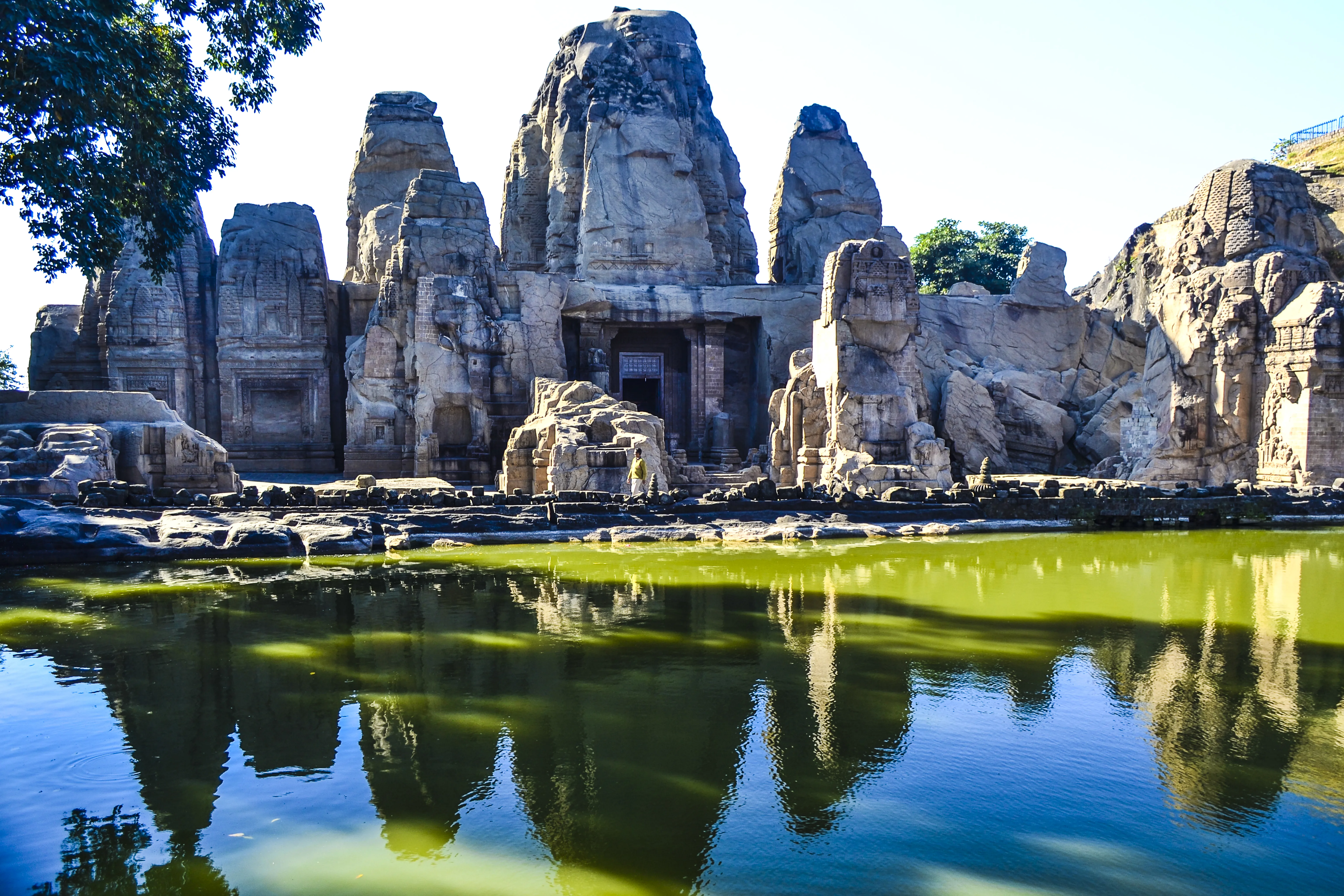
Kangra district is one of North India's most archaeologically rich territories — a valley that has witnessed over 3,500 years of continuous civilisation, leaving behind rock-cut temples that predate the Mughals, hill forts that held off Delhi's armies, shakti peeths of ancient origin and Buddhist monasteries that carry unbroken lineages from Tibet. Yet most tourists who stay in Dharamshala or McLeod Ganj leave without visiting any of it. YourTripDriver's local Kangra cab service specialises in heritage tours that reveal what lies just 35–80 km from your guesthouse — ancient Himachal that the standard tourist trail entirely misses.
Why You Need a Local Driver for Kangra's Heritage Sites
Temple Access & Protocols
Many Kangra temples have dress codes, restricted photography zones and puja timings that first-time visitors miss. Our drivers know the protocols and ensure you experience the full site, not just the outer courtyard.
Local Dialect & Connections
Drivers born in Kangra valley speak the Pahari dialect and have long-standing relationships with temple caretakers and local historians — connections that unlock explanations and access unavailable to walk-in visitors.
Efficient Multi-Site Routing
Kangra's heritage sites are spread across 80+ km of valley. A driver who knows the terrain plans the most efficient sequence — visiting 4–5 major sites in a single day without retracing routes.
Photography Timing Expertise
Masrur Temples in morning golden hour, Kangra Fort in late afternoon light — our drivers know exactly when each site looks its best and plan your arrival accordingly for the finest photographs.
Mountain Road Safety
Several Kangra heritage sites are reached via narrow mountain roads and village lanes. Experienced local drivers navigate these safely and know which vehicles can reach which sites in each season.
Living Historical Context
Our drivers have grown up hearing stories about these sites from grandparents. They provide oral historical context — legends, local lore, royal histories — that no guidebook contains.
Kangra's Must-Visit Heritage Sites — In Depth
Masrur Rock Cut Temples
Often called the "Himalayan Ellora", Masrur is one of India's most extraordinary archaeological sites — a group of early 8th-century temples carved entirely from a single continuous sandstone formation. Unlike most North Indian temples, which are built from assembled blocks, Masrur was hewn directly from the living rock, similar to the cave temples of Mahabalipuram and Ellora but far less visited.
The main complex of 15 shikhara-topped shrines is aligned with remarkable astronomical precision — the central sanctum receives direct sunrise illumination on the spring equinox. Sculptural panels depict scenes from the Ramayana and Mahabharata with a stylistic distinctiveness linking Kangra to the ancient Kashmir Shaivite tradition. The 1905 earthquake damaged several towers, but the site retains extraordinary sculptural integrity. Come at 8–9 AM for the best light and fewest visitors.
Kangra Fort (Nagarkot Fort)
Kangra Fort — known historically as Nagarkot — is one of the oldest documented forts in India, with references appearing in accounts from Alexander the Great's campaigns. It sits on a steep promontory above the Banganga and Manjhi rivers, controlling the entire Kangra valley. The fort's documented sieges read like a condensed history of northern India: Mahmud of Ghazni (1009 CE) looted its legendary treasury, Timur Lang attacked it in 1399, Akbar spent over a year laying siege before taking it in 1620, and the Sikhs under Ranjit Singh occupied it in the 19th century before the British took control.
The 1905 Kangra earthquake severely damaged the structure but left it hauntingly atmospheric — temple ruins within the walls, crumbled palace quarters, and panoramic views of the valley floor 300 metres below. The Ambika Devi and Lakshminarayan temple ruins inside the fort are particularly evocative. Allow time to walk the full perimeter walls for the best views.
Bajreshwari Devi Temple, Kangra
Bajreshwari Devi (Brajeshwari Devi) is one of the 51 Shakti Peethas — ancient sites of goddess worship considered the most sacred in Hinduism. This particular peeth is associated with the goddess's left breast, making it especially significant in the shakti tradition. The temple has been rebuilt multiple times after repeated destructions — most notably by Mahmud of Ghazni and the 1905 earthquake — making it a living demonstration of Kangra's resilient spiritual identity.
The current structure, built in the 1930s, is architecturally restrained but deeply atmospheric during puja hours. The temple complex includes subsidiary shrines and a large courtyard that fills with pilgrims during Navratri. Our drivers know the appropriate hours for darshan and the protocols for non-Hindu visitors wishing to respectfully enter the main sanctum.
Baijnath Shiva Temple
Baijnath is one of India's finest surviving examples of 13th-century Nagara temple architecture. Built in 1204 CE and continuously maintained for over 800 years, the temple complex consists of a main Shiva shrine with an elaborately carved shikhara surrounded by smaller votive shrines. The sculptural programme is exceptional — panels of celestial nymphs, erotic reliefs, mythological narratives and portrait sculptures of royal donors line the outer walls.
Unlike Masrur (which was damaged by the earthquake and is now an ASI museum site), Baijnath remains an active place of worship, adding a living dimension to the archaeological experience. Morning pujas with incense, flowers and devotional music create an atmosphere that pure museum sites cannot replicate. The Binwa river flowing alongside the temple complex adds to the serene setting.
Jwala Devi Temple, Jawalamukhi
Jwala Devi at Jawalamukhi is one of the most remarkable sacred sites in all of India — a temple where natural hydrogen gas seeps from cracks in the earth and burns as nine eternal flames, venerated as manifestations of the goddess Jwala Devi. No statue, no idol — just fire from the earth, burning without fuel for centuries. The phenomenon was so extraordinary that even Akbar, who attempted to quench the flames with water and iron plates, ultimately offered a gold canopy in reverence when he failed.
The temple complex sits around these flame niches in a cliff face, with subsidiary shrines for each of the nine flames corresponding to different goddess forms. It's one of the few major shakti peethas that feel genuinely numinous even to secular visitors — the fire emerging from bare rock is simply inexplicable by ordinary visual experience.
Suggested Full-Day Heritage Tour Itinerary from Dharamshala
This itinerary covers the four major Kangra heritage sites in one well-paced day, departing from Dharamshala or McLeod Ganj.
Heritage Tour Cab Fares from Dharamshala 2025
| Tour Option | Sites Covered | Duration | Sedan Fare | SUV Fare |
|---|---|---|---|---|
| Masrur Half Day | Masrur Temples only | 4–5 hrs | ₹1,800–₹2,200 | ₹2,500–₹3,200 |
| Kangra Heritage Full Day | Masrur + Kangra Fort + Bajreshwari Devi + Baijnath | 10–11 hrs | ₹3,000–₹4,000 | ₹4,500–₹6,000 |
| Jwala Devi Add-On | Full Day + Jawalamukhi temple | 12 hrs | ₹4,000–₹5,000 | ₹5,500–₹7,500 |
| Tashi Jong Monastery | Palampur-area Tibetan monastery + tea garden walk | 5–6 hrs | ₹2,200–₹2,800 | ₹3,200–₹4,200 |
All fares include driver for the full day, fuel and tolls. Entry fees at sites are paid separately by guests. Call +91 96254 51988 to book or customise.
Temple Etiquette for Visitors
- Remove footwear before entering all Hindu temple compounds — there are usually shoe stands or you can leave them with your driver
- Dress modestly — shoulders and knees covered for both men and women. Sarongs/dupattas can be borrowed at most major temples
- Photography restrictions vary — the inner sanctum (garbhagriha) is prohibited for photography at most temples; the courtyards and exterior sculptures are usually permitted. Your driver will clarify at each site
- Non-Hindus at shakti peethas — Bajreshwari Devi and Jwala Devi welcome respectful visitors of all faiths; ask your driver about protocols before entering the inner sanctum
- Timing matters — the best puja times are typically sunrise (6–8 AM) and evening aarti (6–7 PM). Midday is often quiet. Plan around these if atmosphere is important to you
Book Your Kangra Heritage Tour
Full-day tours from Dharamshala covering Masrur, Kangra Fort, Bajreshwari Devi and Baijnath — with a local driver who brings the history alive.
Book Online +91 96254 51988Frequently Asked Questions — Kangra Heritage Tour
Q: What are the best heritage sites to visit in Kangra district?
A: Masrur Rock Cut Temples (700 CE, UNESCO tentative list), Kangra Fort (one of India's oldest and largest hill forts), Bajreshwari Devi Temple (ancient Shakti Peeth), Baijnath Shiva Temple (12th century Nagara architecture) and Jwala Devi at Jawalamukhi (eternal natural flames, Shakti Peeth). A local driver can combine 4–5 of these into a well-paced full-day tour.
Q: How far is Masrur Rock Cut Temple from Dharamshala?
A: 35–40 km from Dharamshala, about 1–1.5 hours by cab. Often combined with Kangra Fort (20 km from Masrur) and Bajreshwari Devi (22 km from Masrur) for a full heritage day tour.
Q: What is the entry fee for Kangra heritage sites?
A: Masrur Temples and Kangra Fort — ₹25 Indians / ₹300 foreigners. Baijnath, Bajreshwari Devi and Jwala Devi — free entry. Our drivers carry change and know current timings and any closure days.
Q: Can I visit Masrur, Kangra Fort and Baijnath in one day?
A: Yes — depart Dharamshala at 8 AM, cover all four major sites comfortably and return by 7 PM. Our drivers plan the most efficient sequence to minimise backtracking across the 80+ km valley spread.
Q: What is the cab fare for a full-day Kangra heritage tour?
A: Full-day heritage tour from Dharamshala/McLeod Ganj: Sedan ₹3,000–₹4,000 | SUV ₹4,500–₹6,000. Includes driver for the full day, fuel and tolls. Entry fees paid separately. Call +91 96254 51988 to book.
Q: What is the best time to visit Kangra heritage sites?
A: October–March for comfortable weather, clear skies and ideal photography light. Masrur at golden-hour morning is particularly spectacular. Avoid monsoon (July–September) for photography — cloud cover and wet trails make site visits less enjoyable.
Q: Are Kangra heritage sites accessible for elderly visitors?
A: Bajreshwari Devi and Baijnath have manageable steps. Kangra Fort involves significant walking on uneven terrain — good footwear essential. Masrur has some steps but the main complex is broadly accessible. Our drivers know which routes are easier and plan accordingly.
Q: Is Kangra Fort worth visiting?
A: Absolutely — one of India's oldest and most historically significant hill forts, with documented history spanning 3,500 years and sieges by Mahmud of Ghazni, Timur, Akbar and Ranjit Singh. The fort ruins contain temple remnants, palace quarters and panoramic Kangra Valley views. Allow 1.5–2 hours for a proper exploration.