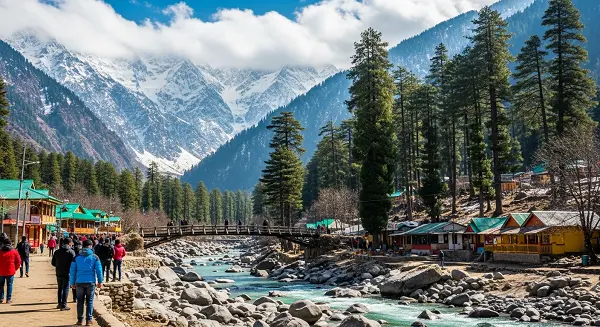
Uttarakhand tourism follows a well-worn script: Nainital for the lake, Mussoorie for the mall road, Haridwar and Rishikesh for the Ganga, Kedarnath and Badrinath for the temples. All of these are worth seeing. None of them requires a local driver who has spent decades in the mountains. The places that do require that local knowledge — a hoof-shaped lake 12 km from Nainital with no commercial waterfront, a wildlife sanctuary ridge in the Almora hills with a 300 km panorama of the central Himalaya, a tea-garden village in Pithoragarh district where the Panchachuli massif fills the eastern skyline at sunrise — are the places this guide covers. These are Uttarakhand's hidden gems: not unknown to the people who live near them, but genuinely undiscovered by the tourism circuit that fills the standard itineraries.
Why a Local Uttarakhand Driver Changes Everything
Kumaon Road Network
The roads to Binsar, Chaukori and Munsiyari branch off at junctions with no signage. A wrong turn in the Kumaon hills adds an hour on a narrow mountain road. Local drivers navigate by landmark and years of runs.
Peak View Windows
Himalayan panoramas at Binsar and Chaukori are clear only before 10–11 AM before valley cloud rises. Our drivers plan overnight stays or 5 AM departures so guests arrive at viewpoints in the clear window.
Sattal Bird Guide Network
The best birdwatching at Sattal requires a local guide who knows the lake sections where rare species concentrate at dawn. Our drivers have contacts with Sattal's established bird guide community.
Mountain Road Conditions
The Munsiyari road and Chaukori approach involve narrow Kumaon mountain roads with seasonal landslide risks. Our drivers have daily road condition information and know alternate routes when main roads are affected.
Orchard and Farm Access
Mukteshwar and Ramgarh fruit orchards are on private land managed by the IVRI and local families. Our drivers make introductions that turn a drive past into a walk through.
Kumaoni Cultural Context
Kumaon's distinct culture, temple traditions, folk art (aipan patterns), and mountain festivals are largely invisible without a driver who can name them, explain them and take you to where they happen.
Uttarakhand's Best Hidden and Offbeat Destinations
Khurpatal — The Hoof Lake Below Nainital
Khurpatal sits 12 km from Nainital at 1,635 m in a forested valley bowl below the main ridge — shaped like a horse's hoof (khuр = hoof), set in dense oak and rhododendron forest with no commercial waterfront, no boat hire touts and no crowds. It is one of the finest birdwatching lakes in the Nainital district — the surrounding forest holds brown fish owl, grey-headed woodpecker, Himalayan kingfisher and numerous migratory waterfowl in winter — and it is almost entirely unknown to the visitors filling boats on Naini Lake 12 km away.
The lake's forest setting means early morning visits (arriving by 6:30–7 AM) offer a quality of light and sound — mist on the water, fish rising, bird calls carrying across the still surface — that is simply not available at Nainital's commercialised lakeshore at any hour. The approach road descends through mixed forest before the lake comes into view below — an arrival that is itself worth the drive. Our drivers combine Khurpatal with a Sattal stop (22 km from Nainital in the same direction) for a natural Kumaon lakes circuit that covers two of the district's finest quiet destinations in a single half-day.
Binsar Wildlife Sanctuary — The 300 km Himalayan Panorama
Binsar Wildlife Sanctuary covers 47 sq km of undisturbed oak and rhododendron forest in the Almora district at 2,420 m. Its Zero Point viewpoint — a clearing on the sanctuary ridge — provides what is widely considered the finest accessible Himalayan panorama in Kumaon: a 300 km arc of snow peaks including Kedarnath (6,940 m), Chaukhamba (7,138 m), Trishul (7,120 m), Nanda Devi (7,816 m — India's highest entirely within Indian territory) and the Panchachuli massif on the far eastern horizon. On a perfectly clear October morning after fresh snowfall on the peaks, this is among the most spectacular mountain views available from any road-accessible point in Uttarakhand.
The sanctuary forest itself is one of the finest in Kumaon — leopard, Himalayan black bear, barking deer and over 200 bird species including the cheer pheasant and koklass pheasant inhabit the forest. The drive to Zero Point through the sanctuary interior is on a narrow road with good forest on both sides and regular wildlife sightings. The small cluster of eco-lodges at Binsar makes it an excellent one-night base for combining the Zero Point sunrise with a forest walk and the drive back through the Almora apple orchards. Our drivers plan Binsar as an overnight from Nainital or as a day trip from Almora.
Chaukori — The Panchachuli Sunrise Village
Chaukori is a small tea-growing village in the Pithoragarh district at 2,010 m, positioned on a ridge directly facing the Panchachuli massif — five glaciated peaks between 6,334 m and 6,904 m that form one of the most visually distinctive Himalayan arrangements in Uttarakhand. The five summits are named after the five Pandava brothers of the Mahabharata (Panchachuli means "five hearths" — the fires on which the Pandavas cooked their last meal before ascending to heaven), and the village sits at precisely the right angle and distance to see all five peaks arrayed in a line with tea gardens and pine forest in the foreground.
At sunrise, the peaks catch the light sequentially from east to west over 20–30 minutes — a slow, gradual illumination that starts as pale pink on the highest summit and works downward as the sun rises. It is one of Uttarakhand's finest sunrise experiences and remains genuinely uncrowded because the 5–6 hour drive from Nainital filters out all but the most committed visitors. The tea gardens below the village ridge are operational and walkable, the handful of small guesthouses are family-run, and the village feels essentially unchanged by tourism. Our drivers can make Chaukori in a single day from Nainital or plan a two-day circuit combining Chaukori with Munsiyari.
Sattal — Seven Lakes and 500 Bird Species
Sattal — the name means "seven lakes" — is a complex of seven interconnected freshwater lakes set in a dense mixed-oak and mixed-temperate forest 22 km from Nainital at 1,370 m. It holds the distinction of being one of India's most significant inland birdwatching destinations: over 500 bird species have been recorded in the Sattal ecosystem, including brown fish owl, Himalayan kingfisher, grey-headed woodpecker, cheer pheasant and dozens of migratory waterfowl that winter here from Central Asia and Siberia. The Scott Christian Ashram, established in the 1930s by the American theologian E. Stanley Jones, maintains the forest and operates a bird guide programme that has run continuously for decades.
The lakes themselves — Nal Damyanti, Panna, Sita, Laxman, Ram, Hanuman and Garud — are connected by the forest trails, each with a slightly different character and bird population. The main lake has some limited boating but the quieter, forested sections accessible on foot are where the serious birdwatching happens. Dawn (5:30–7:30 AM) is the window — the forest is active, the light is right and the day-trip crowds have not yet arrived from Nainital. Our drivers make the early departure from Nainital and know the bird guides to contact. Sattal and Khurpatal are naturally combined as a half-day Kumaon lakes circuit.
Mukteshwar — Orchards, Colonial Bungalows & Nanda Devi Views
Mukteshwar sits at 2,286 m on a ridge at the southern edge of the Kumaon Himalaya, 51 km from Nainital along a road that passes through the Ramgarh fruit orchard belt — one of the finest orchard drives in Uttarakhand, with plum, peach, apricot and apple trees lining the road for 20 km through a landscape that is simultaneously orderly (the IVRI research groves) and wild (the steep valleys dropping away below). The Indian Veterinary Research Institute campus, established here by the British in 1893 for altitude-based research, occupies a large forested estate with colonial bungalows, old English gardens and an atmosphere entirely unlike any other hill station in Uttarakhand.
The Chauli Ki Jali viewpoint — a natural rock ledge on the edge of a cliff at the ridge end — provides an unobstructed 180-degree Himalayan panorama that includes Nanda Devi (7,816 m), Trishul (7,120 m), Nanda Kot and the full arc of the Kumaon Himalaya. The name means "the witch's net" — a local legend involving a deity catching a witch in a stone lattice at this spot. On a clear October morning, the view from the ledge with the valley dropping 1,500 m below on three sides is genuinely vertiginous and genuinely extraordinary. Mukteshwar is 51 km from Nainital and makes a natural full-day circuit with a Ramgarh orchard lunch stop on the return.
Munsiyari — Gateway to the Johar Valley & Milam Glacier
Munsiyari sits at 2,200 m at the end of the Johar Valley road — a drive through some of the finest mountain landscapes in Kumaon that passes through Birthi Falls, multiple river crossings and increasingly dramatic gorge country before arriving at a small market town with one of the most immediate Himalayan frontages of any town in Uttarakhand. The Panchachuli massif here is closer and higher in the sky than from Chaukori — the five peaks fill the entire northern view from the town ridge in a way that makes photographs look like composites. The Nanda Devi peak is also visible to the west.
Munsiyari is the base for the Milam Glacier trek (one of the finest in Kumaon, 5–6 days from Munsiyari) and the Khaliya Top viewpoint (4 km trek from town, 360-degree Himalayan view including into Nepal and Tibet). The Shauka tribal community — semi-nomadic yak herders and former trans-Himalayan traders with Tibet — has its cultural centre here, and the Tribal Heritage Museum in Munsiyari town is one of the better small ethnographic collections in Uttarakhand. The drive from Nainital is 260 km and takes 7–8 hours — worth planning as a 2-night stay. Our drivers know every stop on the approach road including the Birthi Falls detour (12 km before Munsiyari) that most visitors miss.
Best Time to Visit Uttarakhand's Offbeat Places
🌸 March – April (Rhododendron Season)
Rhododendron forests in full bloom on approach roads to Binsar and Chaukori — some of Uttarakhand's finest forest colour. Fruit blossoms in Mukteshwar and Ramgarh orchards in April. Sattal winter bird migration still active.
☀ May – June (Pre-Monsoon)
Clearest Himalayan views before monsoon cloud. Munsiyari and Milam Glacier trail open. Khurpatal and Sattal forest lush. Last clear panorama window at Binsar and Chaukori before July cloud.
🍂 September – November (Peak Season)
Post-monsoon clarity gives the finest photography conditions for Himalayan panoramas. October is the single best month for Binsar Zero Point, Chaukori sunrise and Munsiyari views. Apple harvest in Mukteshwar and Ramgarh.
❄ December – February (Snow Season)
Snow at Binsar and Chaukori — the forests are beautiful but roads require caution. Sattal and Khurpatal have their best winter bird populations. Munsiyari road may close after heavy snowfall. Nainital-area lakes year-round accessible.
Suggested 5-Day Kumaon Offbeat Itinerary from Nainital
Uttarakhand Offbeat Tour Cab Fares 2025
| Tour / Route | Covers | Sedan | SUV / Innova |
|---|---|---|---|
| Khurpatal + Sattal Half-Day | Two Kumaon lakes circuit from Nainital | Rs. 1,400–2,000 | Rs. 2,000–2,800 |
| Mukteshwar Full Day | Ramgarh orchards + Chauli Ki Jali + IVRI estate | Rs. 2,000–2,800 | Rs. 2,800–3,800 |
| Binsar Full Day (from Almora) | Zero Point + sanctuary forest walk | Rs. 1,400–2,000 | Rs. 2,000–2,800 |
| Chaukori Overnight (from Nainital) | Drive + tea garden + Panchachuli sunrise + return | Rs. 4,500–6,000 | Rs. 6,000–8,000 |
| Munsiyari 2-Day (from Nainital) | Drive + Birthi Falls + Panchachuli views + Khaliya Top + return | Rs. 7,000–9,500 | Rs. 9,500–13,000 |
| 5-Day Kumaon Offbeat Circuit | Khurpatal + Sattal + Mukteshwar + Binsar + Chaukori | Rs. 16,000–22,000 | Rs. 22,000–30,000 |
| Delhi to Nainital | 300–320 km, 6–7 hrs | Rs. 5,500–7,000 | Rs. 8,000–10,500 |
| Delhi to Dehradun | 280–300 km, 5.5–6.5 hrs | Rs. 5,000–6,500 | Rs. 7,500–9,500 |
All fares include driver, fuel and tolls. Sanctuary entry fees paid separately. Overnight tours exclude accommodation. Call +91 96254 51988 for a custom quote.
Explore Uttarakhand's Hidden Gems
Panchachuli sunrises, 300 km Himalayan panoramas, hoof-shaped forest lakes and 500-species birdwatching destinations — Uttarakhand beyond the standard itinerary.
Book Now +91 96254 51988Frequently Asked Questions — Uttarakhand Hidden Gems
Q: What are the best hidden and offbeat places in Uttarakhand?
A: Khurpatal (12 km from Nainital — quiet hoof-shaped lake, no crowds), Binsar (30 km from Almora — 300 km Himalayan panorama at 2,420 m), Chaukori (200 km from Nainital — direct Panchachuli five-peak views, tea gardens), Sattal (22 km from Nainital — 500+ bird species in seven interconnected lakes), Mukteshwar (51 km — Chauli Ki Jali cliff viewpoint, colonial IVRI estate, Ramgarh orchards), and Munsiyari (260 km — closest town Panchachuli views, Milam Glacier base). Our local drivers provide access from Nainital, Almora and Dehradun.
Q: How far is Khurpatal from Nainital?
A: 12 km, about 25–30 minutes by cab. A hoof-shaped emerald lake at 1,635 m in dense oak and rhododendron forest — no commercial waterfront, no boat touts, excellent birdwatching. Best combined with Sattal as a half-day Kumaon lakes circuit from Rs. 1,400 (sedan).
Q: What is Binsar and what can I see there?
A: Binsar Wildlife Sanctuary at 2,420 m, 30 km from Almora. Zero Point viewpoint gives a 300 km arc of Himalayan peaks including Kedarnath, Chaukhamba, Trishul, Nanda Devi and Panchachuli — considered the finest accessible Himalayan panorama in Kumaon. Sanctuary entry: Rs. 150 (Indian) / Rs. 600 (foreign). Best in October–November for post-monsoon clarity.
Q: What is Chaukori and why is it Uttarakhand's best sunrise point?
A: A tea-garden village in Pithoragarh district at 2,010 m, 200 km from Nainital. Direct view of the Panchachuli five-peak massif — all five summits illuminated sequentially at sunrise over 25 minutes. Virtually no tourist infrastructure, genuinely few visitors. Requires overnight stay for the sunrise. Our drivers plan 2-day Chaukori circuits from Nainital.
Q: What is Sattal and is it good for birdwatching?
A: Sattal is seven interconnected freshwater lakes 22 km from Nainital — over 500 bird species recorded, including brown fish owl, Himalayan kingfisher and winter migrants from Siberia and Central Asia. The Scott Christian Ashram runs an established bird guide programme. Dawn arrival (5:30–7:30 AM) essential. Best October–March for winter migrants.
Q: How do I get from Delhi to Nainital or Dehradun for an Uttarakhand trip?
A: Delhi to Nainital 300–320 km (6–7 hrs) from Rs. 5,500 (sedan). Delhi to Dehradun 280–300 km (5.5–6.5 hrs) from Rs. 5,000. Both on well-maintained national highways. Call +91 96254 51988 for door-to-door service.
Q: What is Mukteshwar and how does it differ from Nainital?
A: 51 km from Nainital at 2,286 m. Colonial-era IVRI campus in apple orchards, Chauli Ki Jali cliff viewpoint (180-degree panorama including Nanda Devi), the orchard drive through Ramgarh. Almost no commercial tourism. Best combined with a Ramgarh orchard lunch on the return.
Q: What is the best time to visit Uttarakhand's offbeat places?
A: March–April (rhododendron forest, fruit blossoms in Mukteshwar). May–June (clearest pre-monsoon peaks, Munsiyari trek season). October–November is the single best season — post-monsoon air clarity for panoramas, apple harvest, all roads open. December–February for winter birds at Sattal and Khurpatal, snow at Binsar and Chaukori.